
How Virtual Sports Are Widening the Talent Pathway for Traditional Sports
Virtual sports are giving traditional sports a broader, data-driven route for participation and talent identification.
Zhang reached elite cycling through a less conventional route. She began racing as an amateur, won the women's title at the China Road Cycling Open in 2022 and claimed the women's road race at the Chinese National Road Championships in 2024. That victory made her the first female rider from outside China's professional team system to win the national title.
She has also competed regularly in virtual cycling. Zhang won the women's virtual cycling event at the 2023 National Electronic Sports Tournament, or NEST, Grand Finals, then took the same title at both the NEST Summer Finals and Grand Finals in 2024.
Virtual cycling combines a bicycle, a smart trainer and software such as Zwift or MyWhoosh. The bicycle is mounted on the trainer, which connects to a computer, phone or tablet through Bluetooth or ANT+. The equipment records power output, cadence and speed. The software uses those measurements to determine how fast a rider's avatar moves on screen.
Many smart trainers also change resistance according to the gradient of the virtual route. Riders can follow structured workouts, ride freely, join group sessions or enter online races with participants in other cities and countries. Results, rankings and performance data remain attached to a user's account, allowing progress to be tracked over time.
The platforms also support clubs, teams and recurring events. Riders discuss training plans, race tactics and equipment in online forums and chat groups. These communities resemble esports communities in several respects: participants build a persistent digital identity, compare results, organize races and return for scheduled competition.
That community extends beyond the software. While reporting a magazine feature on virtual sports, I interviewed several virtual-sport athletes, later bought a smart trainer and joined a Zwift cycling group on WeChat. Members share screenshots of their rides and results, encourage one another to train and invite other riders to join races. The group provides a practical example of how an indoor workout can become a regular social and competitive activity.
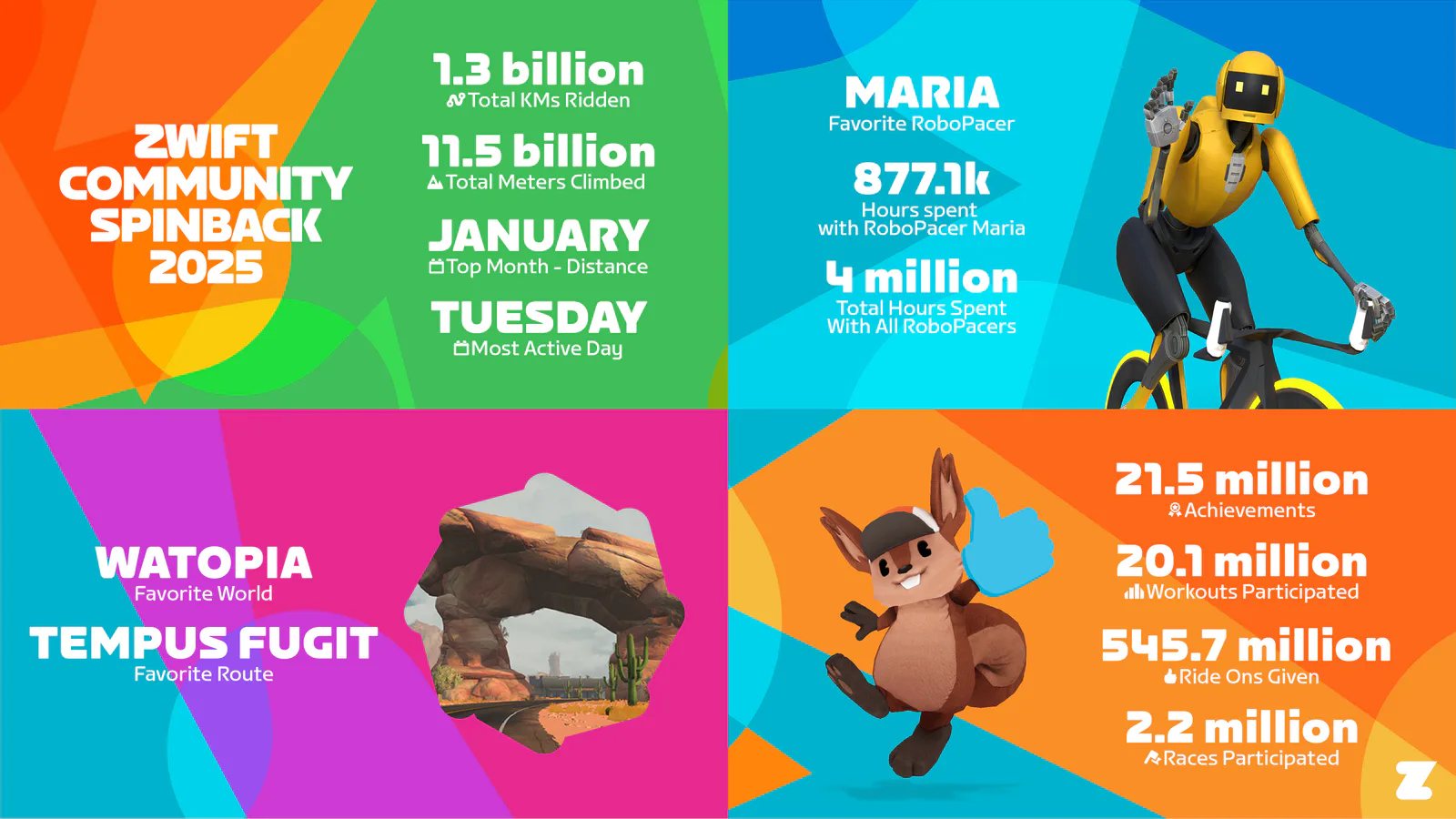


The size of the user base supports this activity. Public reports indicated that Zwift had passed 5 million registered accounts in 2022. MyWhoosh had hundreds of thousands of registered users in 2026. The figures use different reporting periods and should not be read as simultaneous active-user totals, but they show that virtual cycling already has a substantial international audience.
Competition has expanded alongside the platforms. The UCI Cycling Esports World Championships have used MyWhoosh since 2024, with qualification routes involving national federations and open competition. Finalists compete under common technical rules and on standardized equipment for UCI world titles.
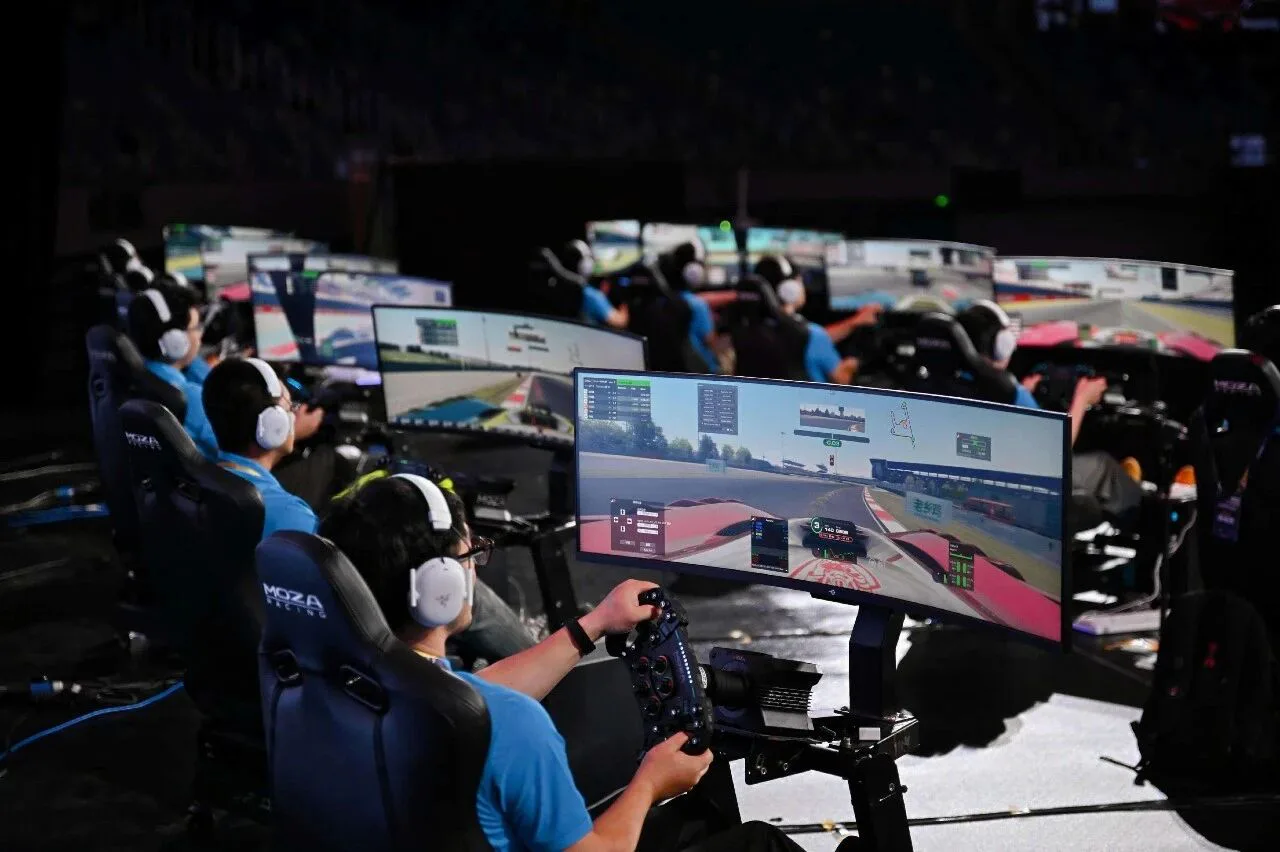
China has also added national-level competition. In 2026, the General Administration of Sport of China approved the China Virtual Sports Open as an annual event. Its first edition included virtual cycling, sim racing and virtual golf, and more than 8,000 people entered the online qualification stage. The Aichi-Nagoya Asian Games also include virtual taekwondo as a medal event for the first time. Its athletes use headsets and motion-tracking equipment to control avatars in contactless bouts.
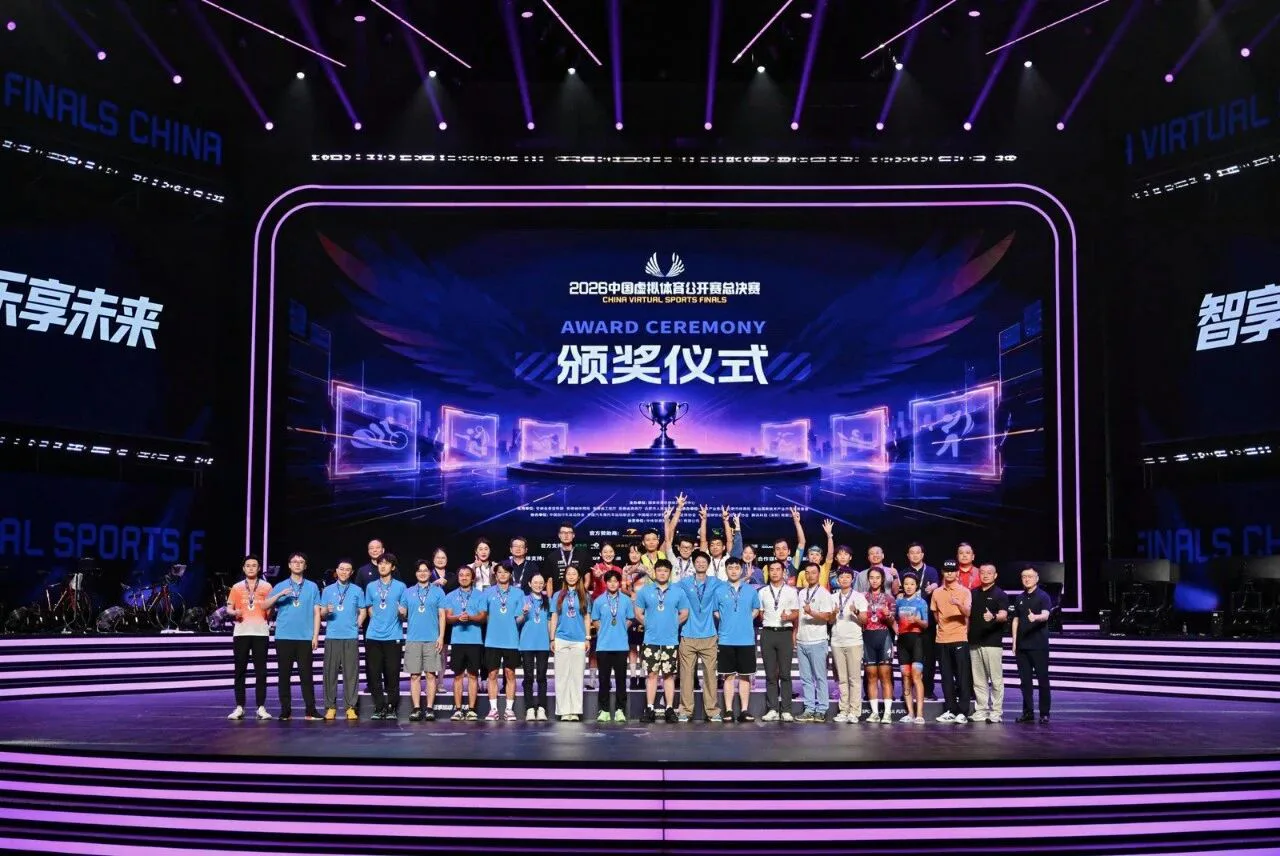
These events now range from daily platform races and public qualifiers to national competitions, international federation championships and a major multi-sport event. Each additional level gives recreational participants more opportunities to record results in organized competition.
China's traditional athlete-development system relies on sports schools, local teams, clubs and provincial teams to identify and train promising athletes. Coaches typically discover talent through local programs, physical testing and offline competition. Access therefore depends partly on age, location, competition opportunities and the resources available in a person's region.
Virtual sport changes the first stage of that process. A participant can enter races, build a record of results and produce comparable performance data before joining a professional program. Coaches and teams can then assess a larger group of athletes than they could through local scouting alone.
The model is similar to a ranked ladder in esports. Players can enter ranked competition without first joining an academy team. Rankings, win rates and long-term performance give clubs a way to identify potential recruits. Virtual cycling can record sustained power, sprint performance, climbing ability and consistency across repeated races, creating a comparable early-stage record for riders.
Zwift Academy offers one example of this approach. More than 100,000 riders took part in its 2024 edition, and the leading participants competed for professional team contracts. An offline trial cannot continuously assess that many people across different regions. A digital platform can place them in the same broad system, including riders in colder areas where winter weather limits outdoor training.
The model still has clear limits. Smart trainers and sensors involve an upfront cost. Hardware accuracy, calibration, weight verification and data manipulation can affect competitive integrity. Virtual racing also cannot fully assess bike handling, cornering, positioning in a peloton, responses to wind and road conditions, or tactical decisions in an outdoor race.
Virtual competition is therefore most useful as an open entry point and an initial screening tool. Professional development still requires coaching, structured training and competition on the road.
Zhang's silver medal in Aichi-Nagoya came from years of training, team support and road racing. It cannot be attributed to virtual cycling alone. Her record across road and virtual events nevertheless shows how the two competitive systems can overlap.
Virtual sport does not replace China's state-supported sports system. Its main contribution is to widen the pool visible at the first stage of talent identification. Athletes can record and compare performances before they enter a professional program. In that sense, virtual sport is building a public, continuous and measurable ranking ladder at the base of traditional sports, giving more people a chance to be seen.

Elizabeth Zhang
Elizabeth Zhang approaches virtual sports with an explorer’s curiosity and a reporter’s notebook. Moving between games, esports and sport, she looks for stories on ground that is still being mapped. She has a soft spot for anything interesting—and a question that keeps her going: where will we find the next great way to play?
More from this author