Riding a digital course: field notes from the NEST finals
At Beijing's University Students' Gymnasium, national finalists, university teams and visitors took part in virtual cycling in different ways.
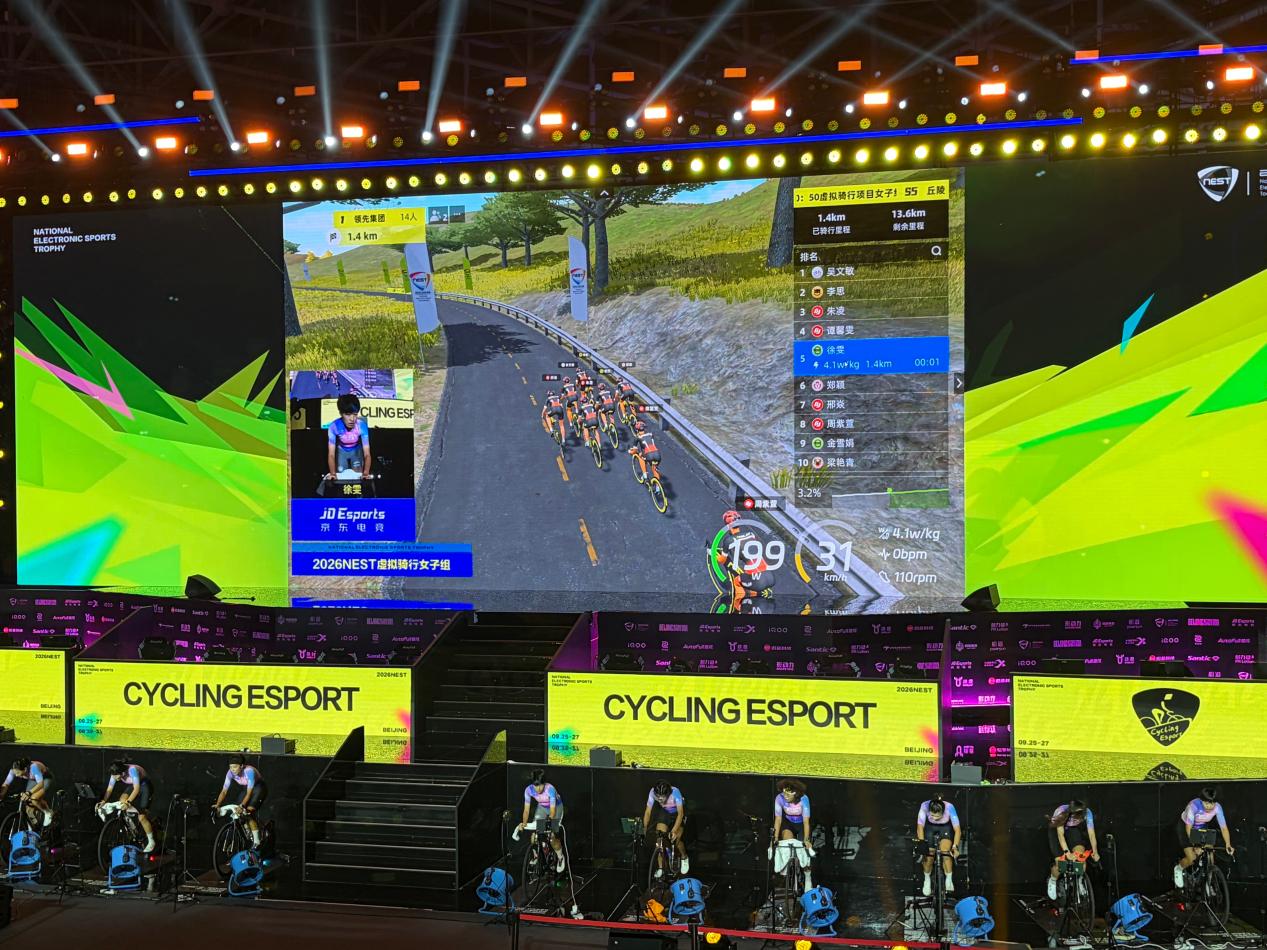
Before the men's virtual cycling final, riders warmed up on bicycles connected to smart equipment. During the race, the bicycles stayed in place while their on-screen riders travelled along a digital course. From the stands, pedalling and out-of-the-saddle efforts could be watched alongside changes in position on the large screen.
The scene was part of the 2026 National Electronic Sports Tournament (NEST) and Beijing International Esports Series (BIES) finals, held from 25 to 27 September at the University Students' Gymnasium at Capital University of Physical Education and Sports in Beijing. The programme included virtual cycling, virtual rowing, Honor of Kings and Delta Force.
Following the cycling race meant watching both the athletes and the screen. The display showed the course, positions and remaining distance, alongside the selected rider's power, speed and cadence. Physical effort was visible on the stage; race positions changed on the screen. Together, the two views made the race legible to spectators.
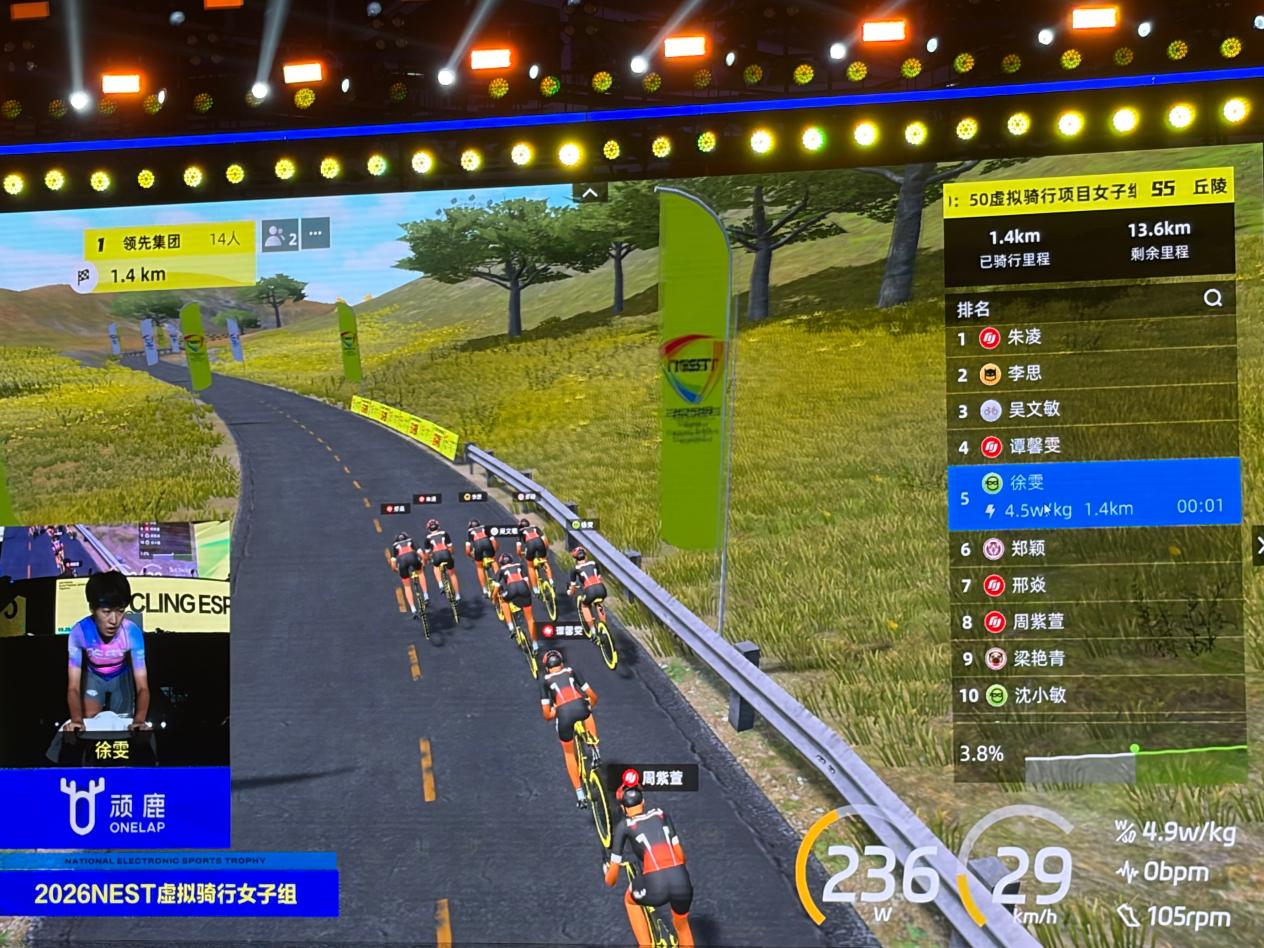
Virtual cycling qualifiers began in June, with in-person rounds in Beijing, Shanghai, Guangzhou, Chengdu and Yueyang. Wu Yunfei won the men's 15km final, ahead of Han Shunyuan and Yang Kai. Li Si won the women's title.
The venue also hosted the first virtual cycling open for universities in the Beijing-Tianjin-Hebei region. Co-organised by Capital University of Physical Education and Sports and a regional collaborative innovation centre for sport, fitness and leisure development, it brought together 72 students from 18 universities. Peking University won the team title. Li Zhaotong and Ma Meizi, both from China University of Geosciences (Beijing), won the men's and women's individual time trials respectively.
Away from the main competitions, an area called NEST Future Sports Ground offered virtual cycling, rowing and skiing activities. It was open to university students, members of cycling and fitness clubs, and the wider public. Cycling equipment and rowing ergometers gave visitors an opportunity to move from watching to trying the activities themselves.
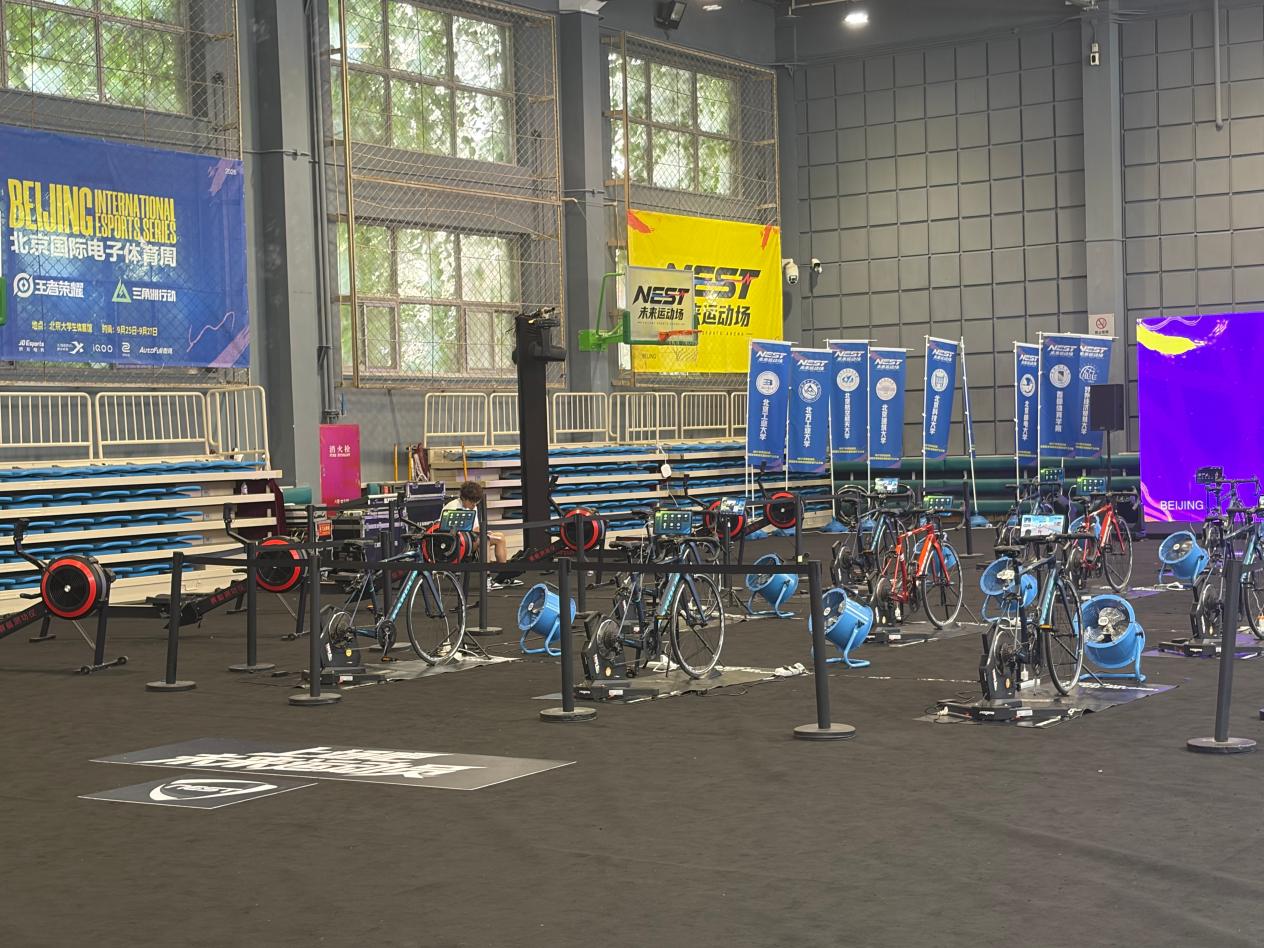
National finals, a university open and public activities ran alongside one another in the same gymnasium. The competitions had their own entry requirements and results; the activity area let visitors get on a bicycle or pull a rowing handle. The courses appeared on screens, but moving through them required physical effort.
Reporting cross-checked against The Beijing News (26 September 2026), Beijing Daily via the Beijing municipal government website (29 September 2026), and the event's closing report (29 September 2026).
https://m.bjnews.com.cn/detail/1790410113129525.html
https://www.beijing.gov.cn/ywdt/zwzt/jjjyth/xy/202609/t20260929_4885831.html
https://news.sina.com.cn/sx/2026-09-29/detail-initnscx7701566.shtml

Haoran Shi
Haoran Shi writes where a love of football meets a curiosity about sport’s next chapter. A football content creator now covering virtual sports, he is drawn to competition in all its forms. On grass or on screen, he looks for the same things: the tension before a result, the will to keep going, and a story worth telling.
More from this authorRelated stories
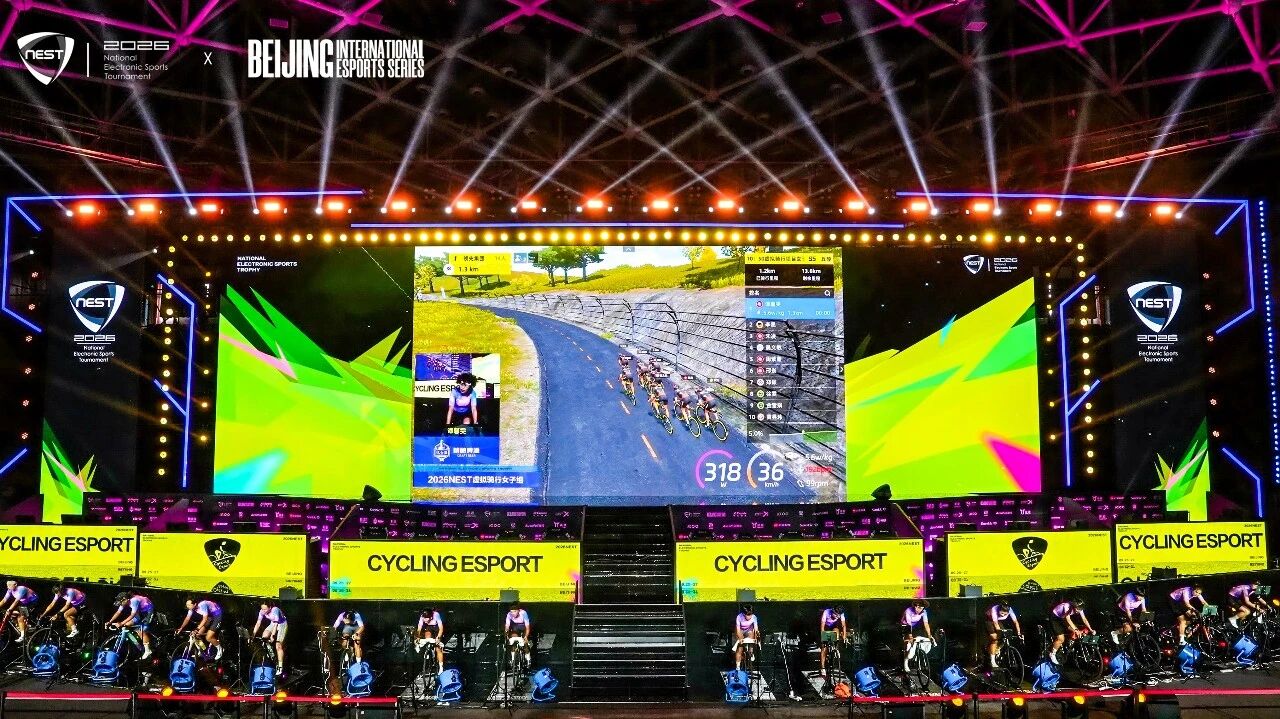
NEST and Beijing International Esports Week finals conclude in Beijing
The 25–27 September finals featured virtual cycling, virtual rowing, Honor of Kings and Delta Force.