Virtual taekwondo prepares for its Asian Games medal debut
A single mixed-gender title at Aichi-Nagoya 2026 will put VR combat, motion tracking and a new set of competitive skills on the Asian Games stage.


Virtual taekwondo will make its debut as a medal event at the 2026 Asian Games in Aichi-Nagoya, Japan, which open on 19 September. The event is set to bring together 16 athletes from 15 countries to compete for a single gold medal, marking a major step for virtual martial arts at a multi-sport Games.
Developed by World Taekwondo and Refract Technologies, the discipline was introduced at Olympic Esports Week in Singapore in 2023 and held its first world championships the following year. Athletes wear a VR headset and motion-tracking sensors: their real kicks and footwork control avatars in a virtual contest without physical contact between opponents.
The competition does not separate athletes by gender or weight. Bouts take place in a four-by-four-metre area and use a best-of-three format, with each round lasting 60 seconds. The shorter rounds demand explosive movement and efficient tactical decisions throughout the contest.
The rules combine health and stun meters. Athletes can win by knocking out an opponent or by retaining more health when the round ends. Kicks are classified by speed, and attacks to the head cause twice the damage of body attacks while demanding more energy from the attacker. Blocking builds up a stun meter; when it fills, the athlete is left unable to block or dodge for three seconds.
These rules change the balance of competitive advantages. Agility, accuracy and reaction speed become central, while the absence of direct contact reduces the role of body mass. Athletes must also learn to judge distance and movement in the virtual environment.
The Asian Games debut offers a major test of the sport’s appeal. A format without direct physical contact may broaden participation, but unfamiliar movement, headset-related dizziness and the cost of equipment remain challenges for wider adoption.
https://oca.asia/news/7404-oca-approves-virtual-taekwondo-for-aichi-nagoya-asian-games.html
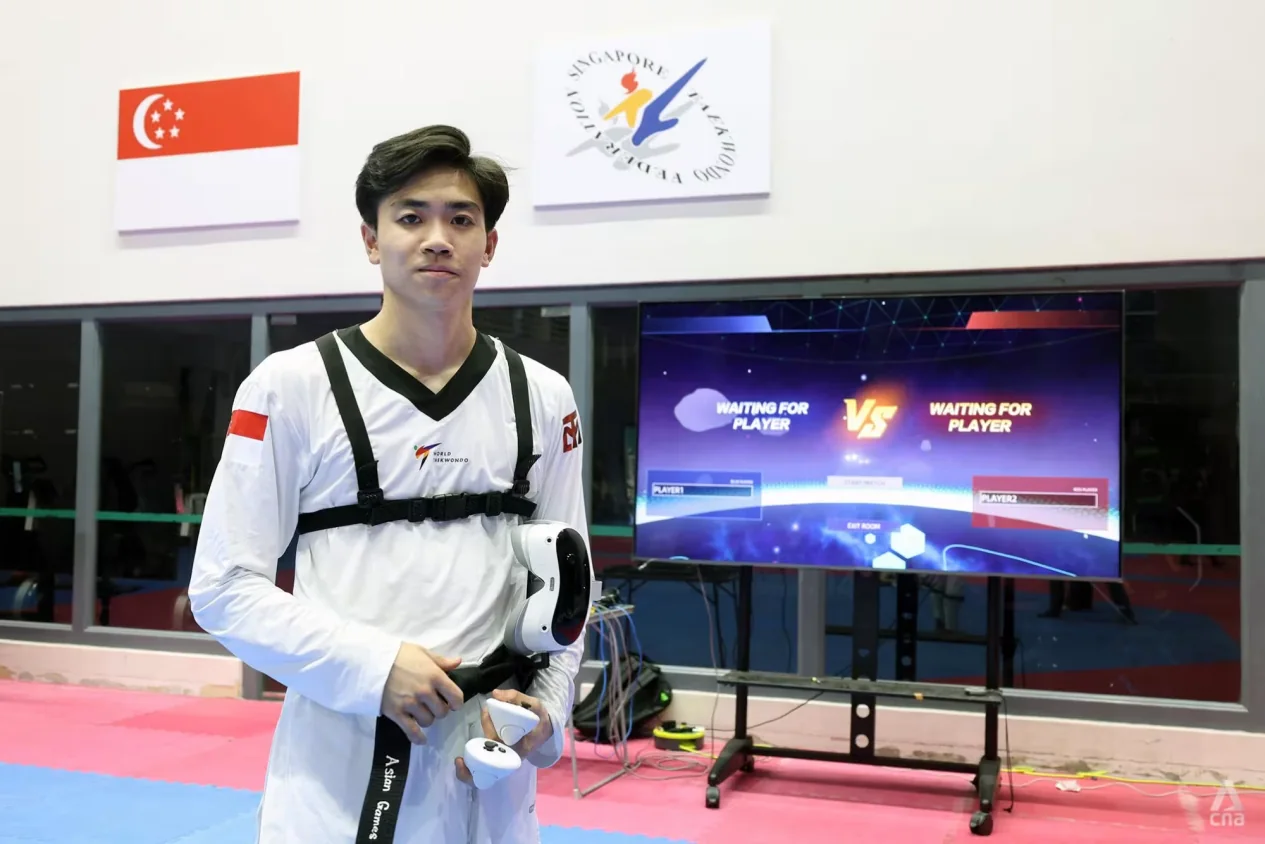 Virtual Taekwondo